

A citywide warning needs local priorities
Davis Vanguard reports rising extreme heat and water risks as Davis, California plans for 2050. For planners, that raises a practical question: which outdoor places should receive attention first?
A useful response would connect the citywide warning to specific streets and public spaces. A shortlist could include walking routes, waiting areas and places where people sit. These are candidate locations for assessment, not confirmed hotspots in Davis.
The heat and water questions also need distinct evidence. A proposed tree canopy could be assessed for its heat effect. Its water needs would require a separate assessment. Keeping those results separate would help planners compare options without treating a heat map as a water plan.
Rank recurring heat before choosing shade
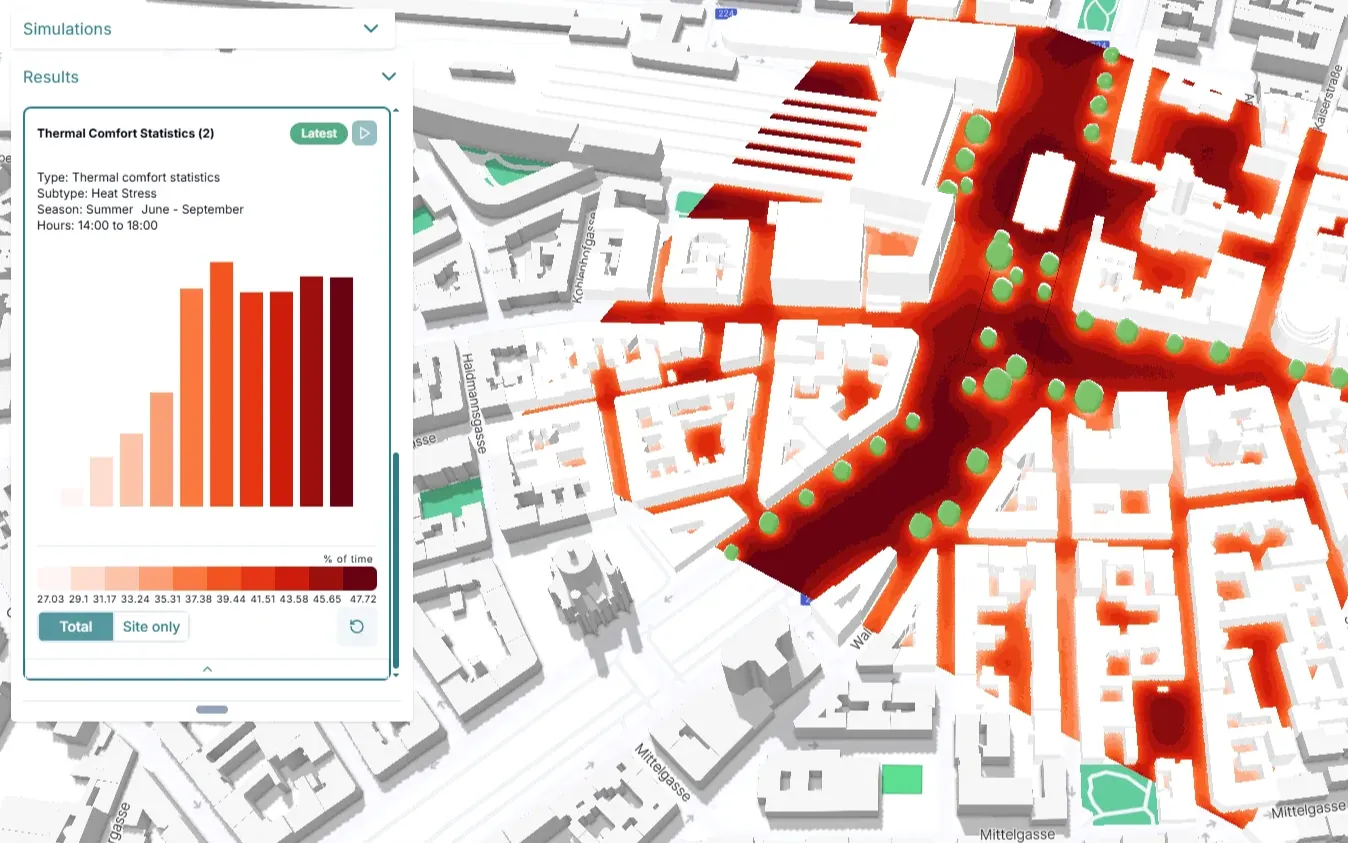
The heat-stress model in the infrared.city Simulation library shows the percentage of a selected period that each ground cell exceeds the UTCI heat-stress threshold. For Davis, planners could use that result to identify places with recurring heat stress under the chosen weather conditions.
That answers a different question from a map of one hot afternoon. It shows how often a threshold is exceeded during the study period. It does not predict individual health outcomes.
Infrared Core uses weather, buildings, trees, shade structures and surface materials to calculate outdoor heat conditions. A Davis study could compare the existing scene with proposed trees or built shade. The same weather, period and settings would keep the comparison consistent.
The Citywide adaptation use case connects district ranking with tests at shortlisted hotspots. Council staff could use those comparisons to explain why a location merits a detailed design study.
Connect investment choices with daily use
The Live climate layer provides heat, shade, wind and sun data by place and hour. A deployment for Davis could support both adaptation studies and questions about outdoor conditions in the coming days.
The planning decision remains specific: where does a proposed shade option reduce simulated heat stress during the hours that matter? Water requirements, costs and local use patterns would sit beside that result when the city selects projects.
Sources
- Davis Vanguard , accessed 31 Oct 2026.