
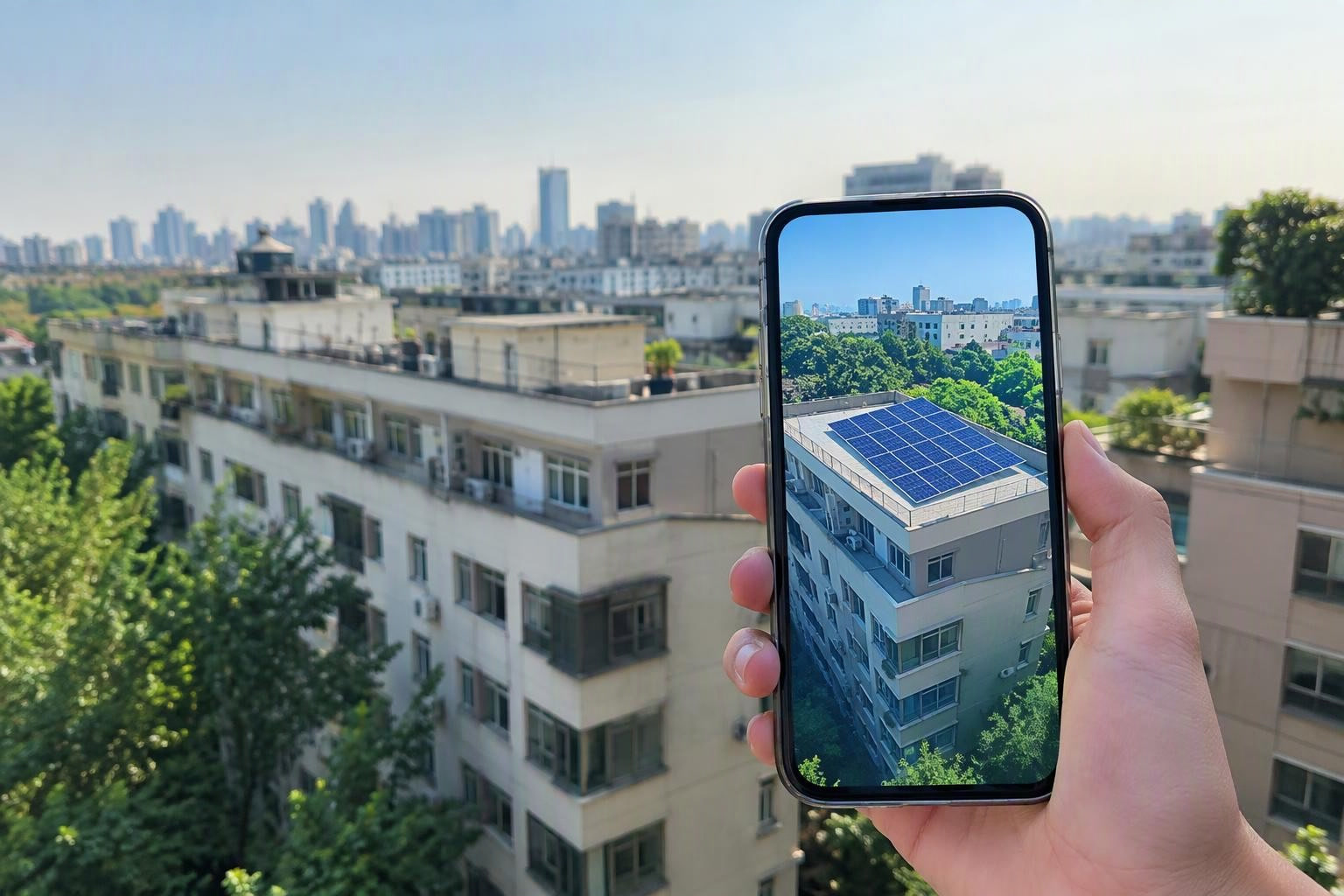
The gap between potential and deployment
A Nature Cities study examines which rooftop solar opportunities in China can realistically move toward deployment. It assesses 367 cities and considers building types, regional differences, electricity consumption and regulatory constraints.
The study estimates that 42% of China’s national technical rooftop solar potential is realistically deployable. It recommends public and industrial buildings in central and southern cities for initial deployment to maximize value.
For software teams, the important distinction is between a physical resource and a deployment decision. An app built around this study should preserve that distinction. A roof’s solar exposure should not stand in for its regulatory eligibility.
Keep solar exposure separate from eligibility
infrared.city can provide the physical exposure layer for such a product. Infrared Core computes solar radiation on roof, facade and ground surfaces. The Simulation library describes the inputs and outputs.
For a public or industrial building under review, the simulation shows how much solar energy reaches each roof surface over the selected period. It uses weather radiation data and scene geometry. Ray tracing accounts for shade and sky exposure.
This result is incident solar energy, not photovoltaic electricity yield. It also does not establish permission to install panels.
A proposed app could display the roof radiation result beside building type, electricity consumption and applicable regulatory information. The software team would manage those separate records. A planner could then distinguish a roof with strong solar exposure from a building that meets the selected deployment criteria.
A product that explains its shortlist
The API and SDK let software teams run solar simulations from Python or TypeScript. The Build an app page provides recipes for applications built on that interface.
For this case, the useful output would be an explained shortlist, not a single solar score. Each candidate could show its simulated roof exposure and the eligibility rules applied by the app. Missing regulatory information could remain visible rather than become an assumed approval.
Engineers can also inspect roof results in the browser Platform. That view can support a discussion about which building deserves closer review. The study’s deployment distinction stays intact: simulated sunlight informs the decision, but does not make it.
Sources
- Nature , accessed 31 Oct 2026.