
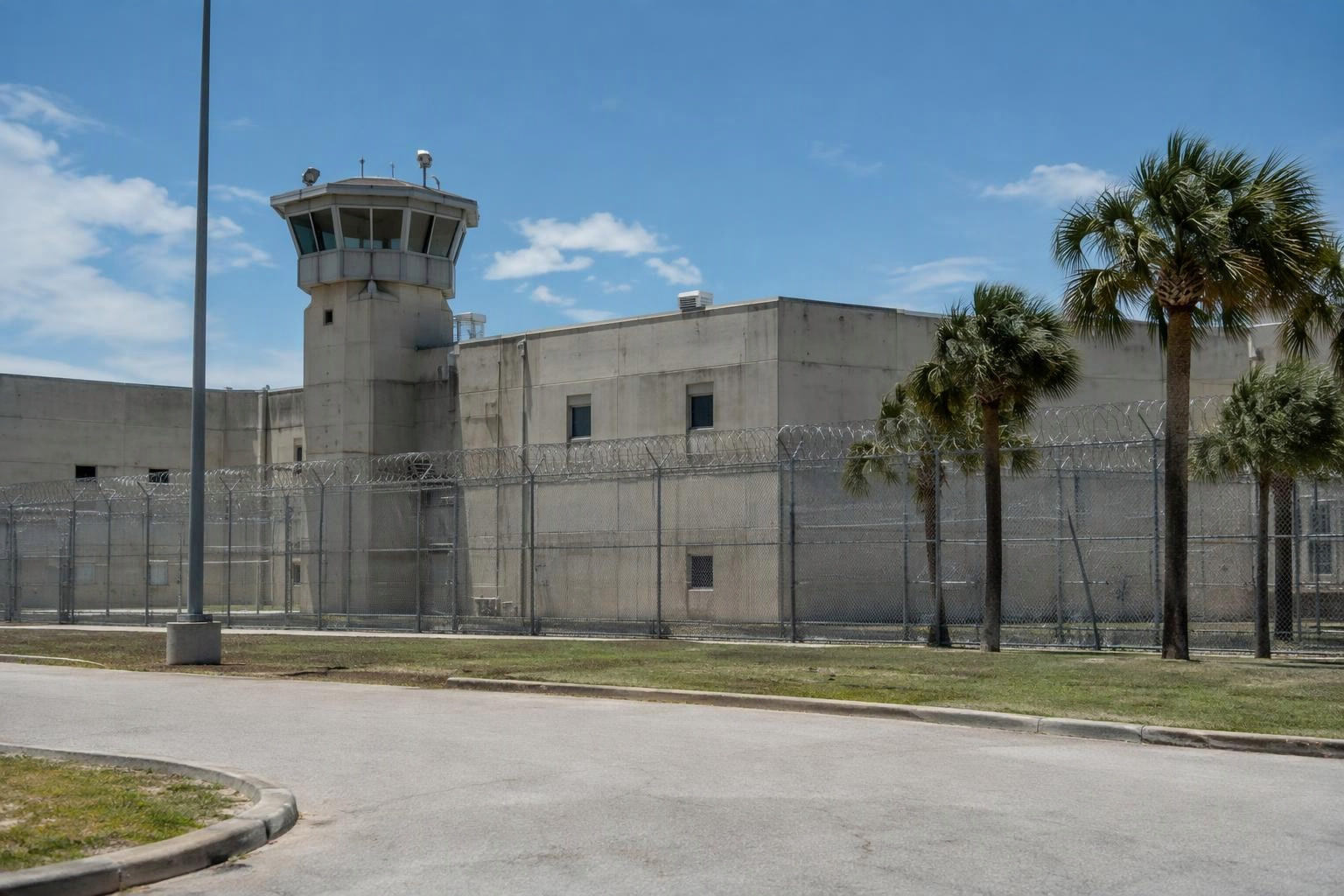
The walls offered no relief
At every monitored location, the prison was hotter inside than outside. That is the sharpest finding in a Miami-area prison study reported by Berkeley Engineering.
The researchers found dangerous indoor temperatures over extended periods. Their findings point to a specific policy problem: outdoor weather data should not replace measurements of heat-index conditions inside prisons.
For a building team, this changes the retrofit brief. The question is not only how the building performs against the weather outside. It is also what happens in occupied spaces throughout the day and night. The indoor measurements make that question concrete.
Keep the night in the comparison
The report describes how a prison built with large amounts of brick and concrete can trap heat when Miami temperatures do not cool off at night. The design question therefore extends beyond afternoon sun.
A proposed retrofit comparison could examine external shade and changes to the building envelope. The existing building would serve as the baseline. Each alternative would use the same weather and operating assumptions.
Infrared Core provides energy balance analysis in the simulation library. It calculates hourly heating and cooling need by zone, with monthly and annual summaries. The method includes thermal mass, solar gains and shade from the surrounding site.
An engineer could use those outputs to examine which option reduces calculated cooling need. The hourly results would also show when the difference appears. For this case, a useful comparison would keep nighttime results visible rather than present only an annual total.
A shortlist, not a safety verdict
For this prison, the retrofit decision and the evidence of exposure need separate measures. Calculated cooling need is not a measured indoor heat index. It is also not equipment energy use or peak plant load.
Compare design options can help a project team narrow the alternatives before detailed assessment. Solar radiation analysis adds a separate view of energy reaching roofs and facades. That gives the team a basis for choosing where to test external shade.
The building design tools from infrared.city support these comparisons in existing design workflows. A retrofit team could compare envelope and shade alternatives while keeping the measured indoor conditions central to its brief.
The useful output is a reasoned shortlist for further assessment. It is not a declaration that occupied rooms are safe. Indoor heat-index measurements remain the evidence the study calls for.
Sources
- Berkeley Engineering , accessed 17 Nov 2026.