
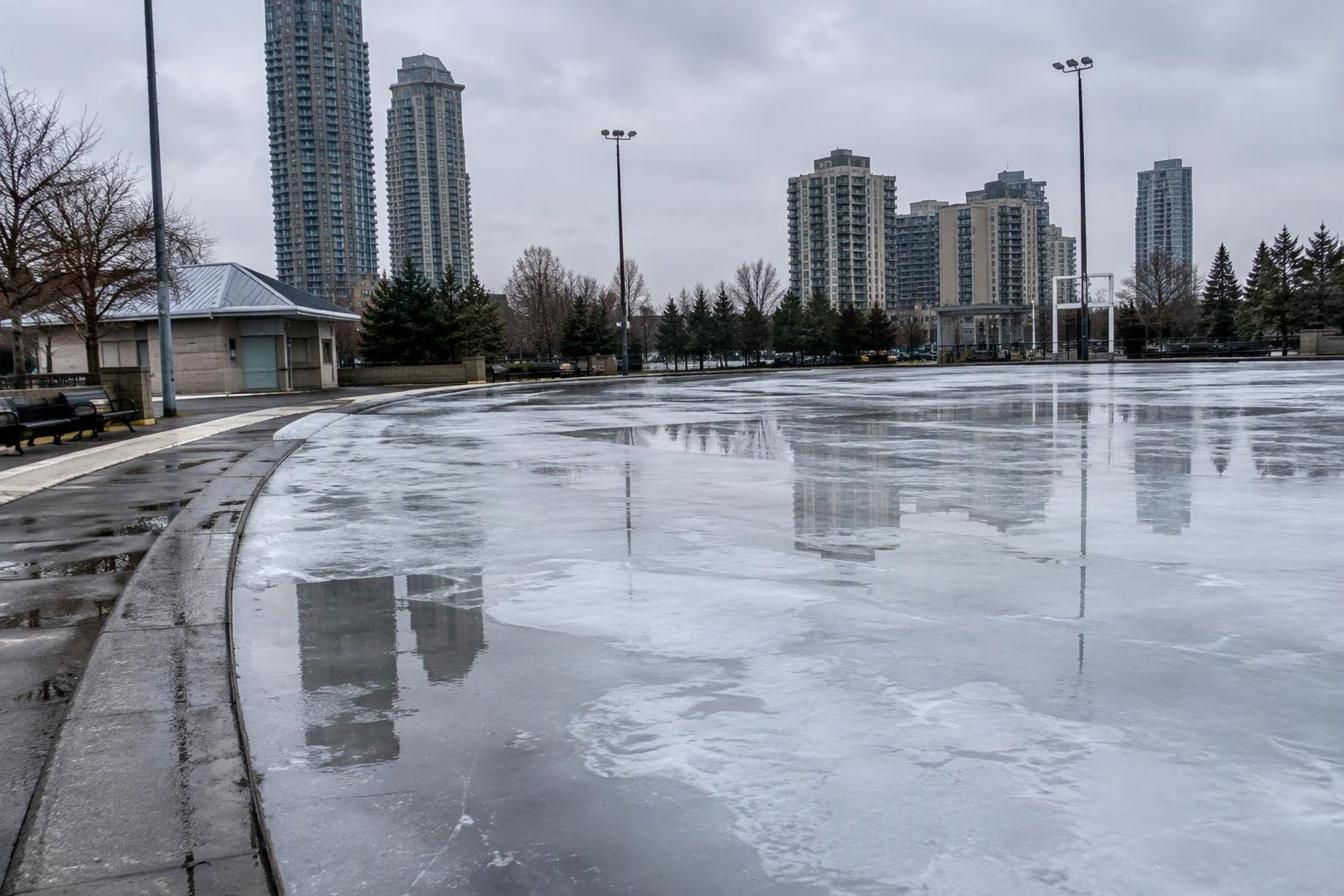
Warm weather can keep the rink closed
A milder winter can mean less skating. Mississauga, Canada, warns that warm weather may melt the ice base at outdoor rinks. Openings may be delayed or paused because of safety concerns.
The city says a strong El Niño could bring a slower start to winter. It could also bring more days with temperatures moving above and below freezing. Yet snow and ice may still require winter maintenance, including road salt.
For facility operators, that warning raises separate questions. What weather should inform the building energy plan? What conditions should trigger a site inspection? A seasonal outlook gives context, but each decision needs a result at the right time scale.
Separate building demand from ice conditions
Consider a municipal building beside an outdoor rink. The building team could examine heating demand without treating that result as evidence that the rink can open.
Infrared Core provides an energy-balance model in the simulation library. It calculates monthly heating and cooling need from spaces, barriers, openings, weather and energy settings. It also reports annual energy use intensity.
For this case, an operator could compare the building under selected weather files. The useful question is how its energy need changes under those assumptions. That comparison could support a review of the facility’s energy plan.
The model is a screening method. It reports energy need, not bills or delivered energy. Its monthly output is not a rink ice assessment or an hourly heating control instruction.
Keep the short-term view beside the monthly result
The next operational question concerns exposure at the building itself. infrared.city’s heat-load view shows sun and heat load on facades and roofs, hour by hour, for the coming days. An operator could use that view to identify surfaces that need closer attention.
The operator tools also cover ice risk for winter crews and heat-load monitoring for buildings. These answer different questions from the monthly energy calculation.
Mississauga’s warning makes that distinction useful. Rink opening, route maintenance and building energy planning should not depend on a single seasonal label. Keep the monthly demand comparison separate from the short-term conditions that crews must assess.
Sources
- City of Mississauga , accessed 13 Nov 2026.