
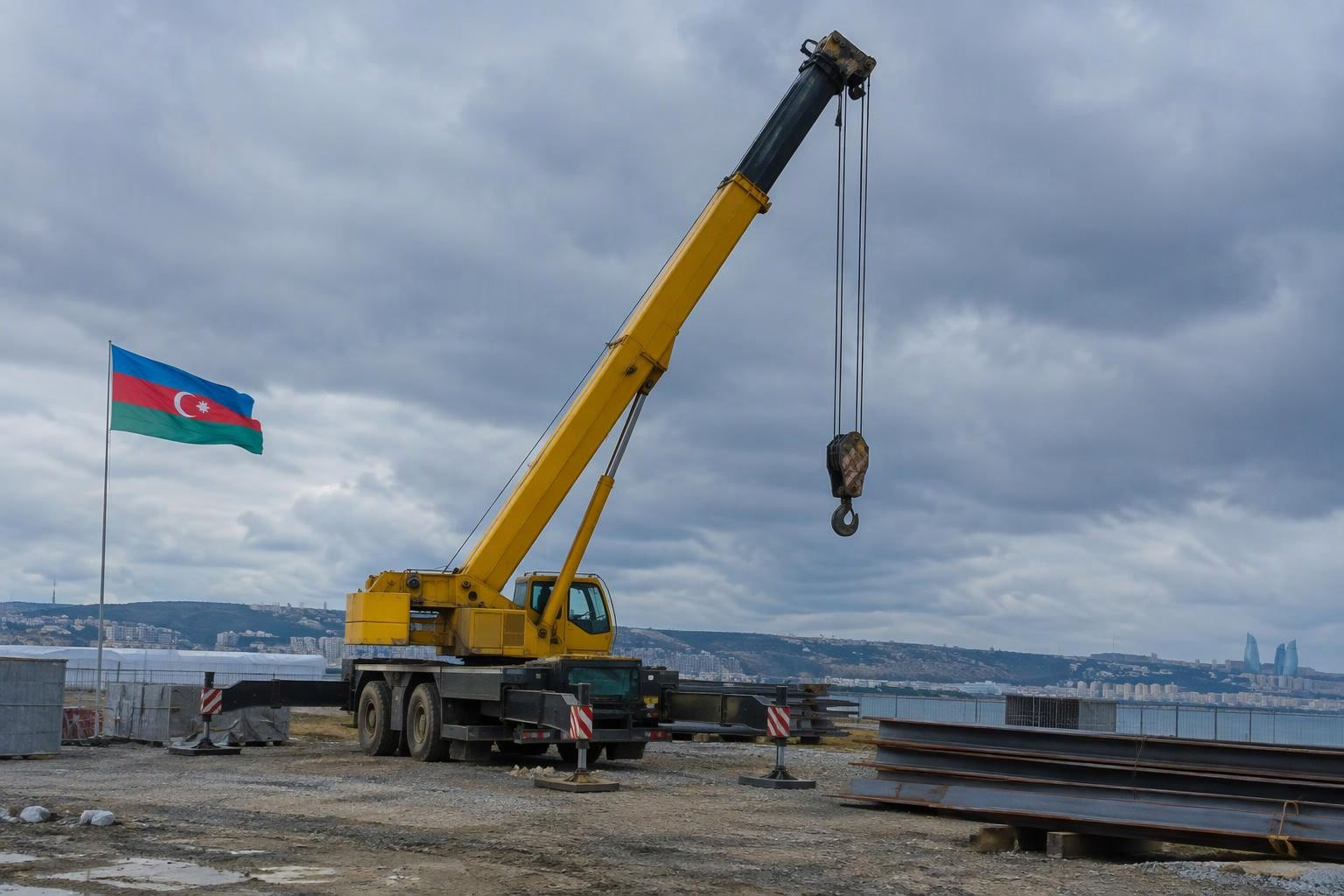
A crane may be allowed to work, until it is not
In Azerbaijan, the equipment manual can decide whether a ground-based lifting crane may operate in strong wind. But above 8 points of wind force, the manual no longer makes a difference: all work with these cranes must stop immediately.
The law amending the Labor Code adds wind alongside severe frost and heat as an adverse weather condition. It covers employees at open worksites, including installations and structures. Workers have the right to suspend work and take breaks during strong winds.
At wind force from 6 to 8 points, a ground-based lifting crane may operate only if its technical passport expressly permits it. The distinction matters for an operator planning a lift: the decision depends on both the wind and the equipment.
Where the site shape matters
A site plan can help an operator ask a different question before a windy shift: where might workers face more exposure on the ground? Buildings can shelter some areas and accelerate wind in others. Access routes and work areas may not have the same conditions.
The wind speed simulation from infrared.city estimates wind at pedestrian level for a chosen wind direction. An operator could use it to compare exposed and sheltered parts of a worksite, then consider where to place ground-level tasks or breaks. The platform lets teams inspect site analyses in a browser and compare design options.
This is a planning view, not a crane operating limit. The wind simulation shows pedestrian-level speed, not wind at crane height or a measurement of gusts. Operators still need measurements and the equipment's technical passport for lifting decisions.
Wind and heat need different plans
The amendment puts wind beside heat and frost, but the site questions are not identical. A place that offers shelter from wind may not be the best place to work during heat. An operator can examine these conditions separately before choosing where to locate a task.
For heat, infrared.city's outdoor work analysis shows where and when a site is too hot for work. Its operator tools also cover heat and winter risks. Together with a wind study, these views can help a team discuss work locations and schedules before conditions interrupt a shift.
Sources
- 1news.az , accessed 20 Nov 2026.